



HOW TO CHOOSE THE RIGHT GUITAR GIG BAG
Carry Options Explained.
The best guitar bag is not just the one that fits your instrument. It should also fit the way you move.
Think about a typical day with your guitar or bass. Are you walking from the car to a rehearsal room? Crossing a school campus? Navigating public transportation? Carrying a pedalboard, amp or other gear at the same time? The way your gig bag rests in your hand or on your back can make the difference between an easy load-in and an awkward trip.
Today’s guitar gig bag carry options generally fall into three categories: a standard carry handle, two backpack straps or a single sling-style strap. Each offers a different balance of control, convenience and hands-free mobility. Understanding those differences will help you choose a comfortable guitar gig bag for the places you play most.
START WITH THE RIGHT FIT
Before comparing straps and handles, make sure the bag is designed to fit your instrument. A bag that is too small can place pressure on the headstock, bridge or body. One that is too large may allow the instrument to shift during transport.
Check the bag’s interior dimensions against your instrument’s:
1. Overall length
2. Body length
3. Upper, middle and lower-bout widths
4. Body depth
5. Headstock shape and width
Do not rely on a label such as “electric guitar” or “bass” alone. Body shapes and dimensions vary, even within the same instrument category. Gator’s Case Finder can help narrow the options by instrument model or dimensions.
Extreme-shaped guitars may require a specially designed gig bag. V-style, offset, and other unconventional body shapes can exceed the dimensions of a standard guitar bag, so be sure to check the interior shape and measurements before choosing.
Once you know the fit is right, consider how you want to carry it.
OPTION 1: STANDARD CARRY HANDLE GIG BAGS
A standard carry handle keeps the bag at your side, where you can easily see and control it. This familiar design works especially well for short, direct trips, such as moving from your car to a lesson, rehearsal space, studio or stage.
A carry handle may be right for you if:
1. You usually travel short distances with your instrument.
2. You want close control in doorways, crowds or tight backstage areas.
3. You frequently lift the bag in and out of a vehicle.
4. You prefer a simple grab-and-go carry method.
5. You do not need both hands free while walking.
Look for a handle with comfortable padding, reinforced stitching and strong attachment points. Handle placement also matters: a well-balanced bag is easier to carry because the headstock or body is less likely to tip toward the ground.
The main tradeoff is that the bag occupies one hand and places the load on one side of the body. For a longer walk – or when you also need to carry an amp, pedalboard or accessory bag – a hands-free option may be more convenient.
OPTION 2: BACKPACK-STYLE GUITAR GIG BAGS
Backpack-style guitar gig bags use two shoulder straps to spread the load across the upper body while keeping both hands available. They are a popular choice for players who walk farther, climb stairs, use public transportation or regularly carry additional gear.
Backpack straps may be right for you if:
1. You have a longer walk to lessons, rehearsals or gigs.
2. You need both hands free for other equipment.
3. You travel through campuses, city streets, airports or transit stations.
4. You prefer the stability of two shoulder straps.
5. Your guitar or bass bag will be on your back for extended periods.
For a comfortable fit, look for padded, adjustable straps and reinforced connection points. Removable or stowaway straps can also keep the back of the bag cleaner when the straps are not in use.
Remember that a guitar or bass extends above and below a typical backpack. Be aware of the extra clearance when entering vehicles, walking through doorways or moving through crowded spaces. Removing the bag before navigating a tight area gives you better control and helps prevent accidental bumps.
OPTION 3: SLING-STYLE GUITAR GIG BAGS
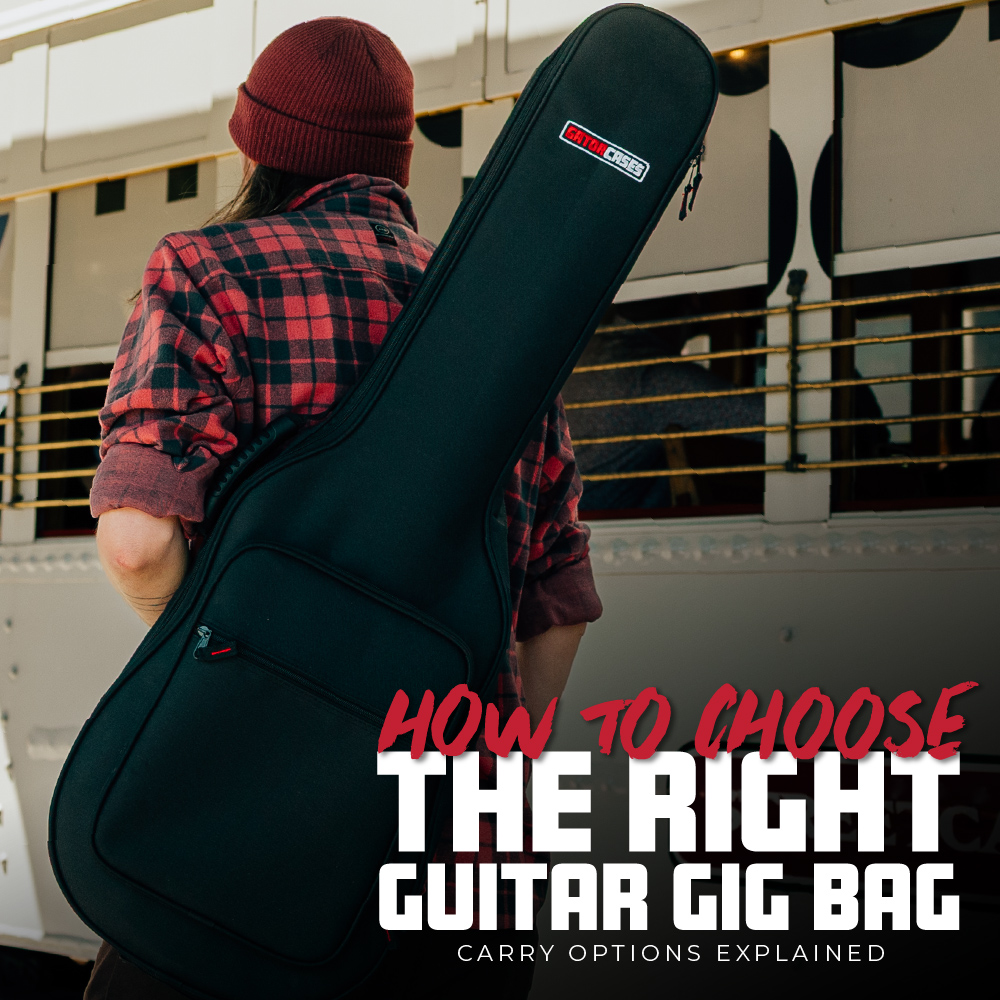
Sling-style guitar gig bags use one strap to create a streamlined carry option. Worn over the shoulder or positioned across the back as designed, a sling bag can provide hands-free convenience without the full two-strap setup of a traditional backpack-style bag.
This style is especially useful for players who want to put on or remove their bag quickly. It can be a practical middle ground between carrying an instrument by hand and wearing it like a backpack.
A sling strap may be right for you if:
1. You want a fast, uncomplicated way to pick up and carry your instrument.
2. You prefer one strap instead of a full backpack harness.
3. You make short to moderate trips between your car, home, lessons or rehearsals.
4. You want to keep a hand free while maintaining a streamlined profile.
5. You frequently take the bag on and off during load-in or setup.
Because one strap supports the load, strap width, padding and adjustability are important. The bag should rest close enough to the body to feel stable without restricting movement. A properly adjusted sling also helps keep the instrument from sitting too low or shifting excessively as you walk.
Meet Gator’s New Sling-Style Gig Bags
Gator’s new guitar and bass gig bags add a single padded sling-style carry strap for players who want a simple, streamlined way to transport their instrument. The bags combine a rugged 600-denier nylon exterior with 10 mm foam padding, reinforced piping and an exterior accessory pocket for everyday essentials.
Whether you are heading to a lesson, rehearsal, writing session or local gig, the new sling design gives you another way to carry your instrument based on how you travel – not just what you play.
Explore Gator Sling-Style Guitar and Bass Gig Bags
GUITAR GIG BAG CARRY OPTIONS AT A GLANCE
| Carry Style | Best Suited For | Main Advantage | What To Consider |
| Standard carry handle | Short trips, vehicle loading and tight spaces | Direct control and quick grab-and-go use | Occupies one hand and places the load on one side |
| Backpack straps | Longer walks, public transit and carrying other gear | Two-strap stability with both hands free | Requires more clearance behind and above you |
| Single sling strap | Quick trips, frequent on-and-off use and streamlined carry | Simple hands-free mobility with one strap | Fit and strap adjustment matter because one strap supports the load |
HOW TO FIND THE MOST COMFORTABLE GUITAR GIG BAG FOR YOU
Comfort is personal. The same carry system may feel different depending on your height, instrument weight, clothing and travel routine. When comparing bags, evaluate the complete setup rather than the strap style alone.
1. Consider How Far You Usually Walk
A carry handle may be all you need for a quick trip from the car to the stage. Backpack straps can be more practical for a long walk, while a sling offers a streamlined option for short to moderate everyday travel.
2. Include The Weight Of Your Accessories
Cables, tuners, strings, tools and sheet music add weight. Load the pocket with the items you normally carry before deciding how the bag feels.
3. Check Adjustment Range And Strap Placement
Straps should adjust to keep the bag stable and close to the body. If the bag hangs too low or shifts with every step, the carry system may not be adjusted correctly for you.
4. Think About Your Other Gear
If you regularly carry a pedalboard or another bag, consider which hand needs to stay free. Backpack and sling-style guitar gig bags can both provide hands-free mobility, but they distribute the load differently.
5. Test Your Real Routine
If possible, try the bag with your instrument inside. Walk, turn, use a doorway and practice taking the bag on and off. A comfortable guitar gig bag should work with your actual movements, not just feel good for a few seconds.
WHAT TO LOOK FOR IN A BASS GUITAR GIG BAG
A bass guitar gig bag requires a few additional considerations because basses are often longer and may feel more top- or bottom-heavy when carried.
First, verify the full interior length and body dimensions. Then look at the position of the carry handle or strap attachments. A balanced bag will be easier to control and less likely to tilt as you move. Padding, strap width and reinforced connection points become even more important as the total carrying weight increases.
Finally, load the accessory pocket as you normally would. Placing heavier items in an exterior pocket can change the balance of a longer bag. Testing the complete setup will give you a much better idea of how that bass guitar gig bag will feel on the way to a rehearsal or show.
CARRY STYLE MATTERS, BUT PROTECTION STILL COMES FIRST
The right carry system makes transportation easier, but it should be paired with the protection your routine demands. Compare these features when choosing any guitar or bass gig bag:
1. A secure, instrument-specific fit
2. Appropriate interior padding
3. Protection around the neck, headstock and body
4. Rugged exterior material
5. Reinforced edges, piping and stress points
6. Reliable zippers and hardware
7. Storage that keeps accessories organized
8. Weather-resistant features when needed
A lightweight everyday bag may be ideal for lessons and local rehearsals, while frequent touring, air travel or environments with a greater risk of impact may call for a more structured gig bag or hard case.
WHICH GUITAR GIG BAG CARRY STYLE IS RIGHT FOR YOU?
Choose a standard carry handle if you want direct control and mainly make short trips.
Choose backpack straps if you walk longer distances, carry other gear or want the stability of two straps.
Choose a single sling strap if you want streamlined, hands-free carry with quick on-and-off convenience.
There is no single answer for every musician. The best guitar bag is the one that fits your instrument, provides the protection you need and feels natural during the trips you make most.
Explore Gator guitar gig bags or use the Gator Case Finder to find an option built around your instrument and your routine.