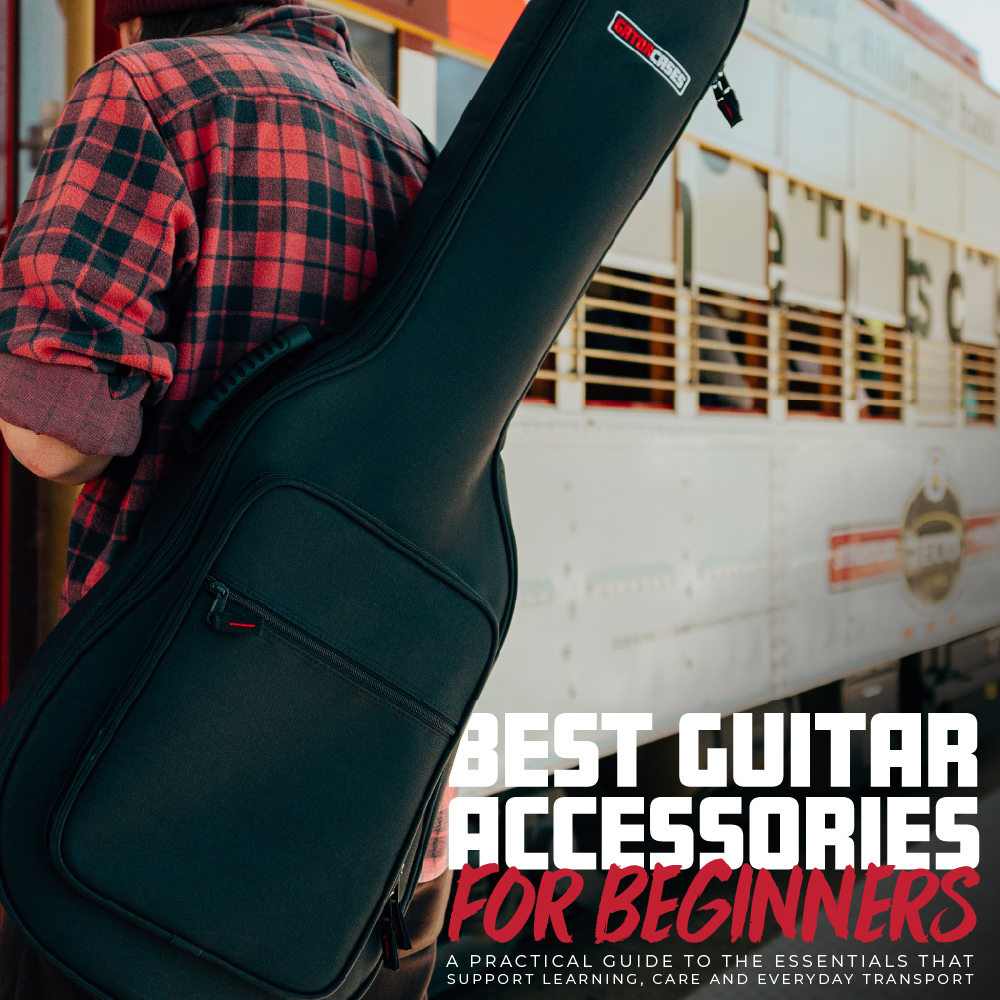
A practical guide to the essentials that support learning, care and everyday transport.
Learning guitar starts with an instrument, but a few well-chosen accessories can make every practice session easier, more comfortable and more productive. The best guitar accessories for beginners are not necessarily the flashiest products or the biggest bundle. They are the practical tools that help you tune accurately, play comfortably, care for your instrument and take it where you want to go.
So, what does a new guitar player need? Start with a reliable tuner, a small selection of picks, spare strings, a safe storage or transport solution and any essential gear your specific instrument requires. For an electric guitar or bass, that usually includes an instrument cable and an amplifier or another suitable way to hear the instrument. A strap, stand, cleaning cloth, capo, metronome and music stand can then be added according to how and where you play.
The goal is not to collect every accessory on day one. It is to build a useful setup that removes friction from learning.
BEGINNER GUITAR ACCESSORIES: THE QUICK CHECKLIST
| Accessory |
Why it matters |
When you need it |
| Tuner |
Helps the guitar sound right and trains your ear |
From the first practice session |
| Picks |
Lets you explore different playing feels and sounds |
Immediately for most players |
| Spare strings |
Keeps one broken or worn string from stopping practice |
As soon as you begin playing regularly |
| Gig bag or case |
Protects the instrument during storage and transport |
Immediately if the guitar did not include one |
| Guitar stand |
Gives the instrument a designated place between sessions |
Helpful for home practice |
| Guitar strap |
Supports comfortable seated or standing playing |
When you want stability or plan to play standing |
| Instrument cable |
Connects an electric or acoustic-electric instrument to an amp |
Essential for amplified instruments |
| Cleaning basics |
Helps remove sweat, dust and fingerprints |
Useful from the start |
| Capo |
Changes key without changing familiar chord shapes |
Helpful for many acoustic and vocal arrangements |
| Metronome or practice app |
Develops steady timing and focused practice habits |
Useful at every skill level |
1. A Reliable Guitar Tuner
Even the best chord shape will sound wrong if the instrument is out of tune. That makes a tuner one of the most important accessories for new guitar players.
Clip-on tuners are a practical starting point because they are compact, portable and sense vibration through the instrument. Pedal tuners suit electric guitarists and bassists who want tuning at their feet, especially as they begin using more stage gear. Tuning apps can also be convenient for practice, although room noise may affect how easily a phone microphone hears the instrument.
Look for a display that is easy to read and controls you can understand quickly. The best tuner is the one you will use at the beginning of every practice session.
2. A Small Selection of Guitar Picks
Picks are easy to experiment with, but their shape, material and thickness can noticeably change how playing feels. Thinner picks tend to flex more and can feel approachable for strumming. Medium or heavier picks provide a firmer response that many players prefer for single-note lines, controlled rhythm parts and bass.
Instead of committing to one style immediately, begin with a variety pack. Try several thicknesses during the same chord progression or exercise, then notice which pick gives you the best combination of comfort, control and sound. Fingerstyle players may not use a pick at all, and that is equally valid.
3. Spare Strings That Match Your Instrument
Strings wear gradually and can also break without warning. Keeping one full replacement set nearby prevents a small problem from ending a lesson, rehearsal or weekend of practice.
Choose strings made for your instrument: acoustic steel-string, classical nylon-string, electric guitar and bass strings are not interchangeable. String gauge also affects feel and setup. If you do not know what is currently installed, check the guitar manufacturer’s guidance or ask a teacher, guitar technician or music retailer before changing gauge.
A string winder can speed up changes, and a suitable string cutter can keep excess string neat. Beginners who have never restrung a guitar may benefit from having the first change demonstrated in person.
4. A Comfortable Guitar Strap
A strap is essential for standing, but it can also stabilize the instrument while you are seated. Look for secure attachment ends, enough adjustment range for your playing position and a width that feels comfortable across your shoulder.
Set the length so your fretting hand can move without an extreme wrist angle and your shoulders can stay relaxed. If the guitar has only one strap button, common on some acoustic guitars, ask a qualified retailer or technician about the correct attachment method. Never assume a strap or accessory is compatible without checking the instrument and hardware.
5. A Stable Guitar Stand
A stand gives your guitar a predictable place to rest between sessions and can make it easier to pick up the instrument for a few minutes of practice. Choose a stand designed for your guitar’s body shape, place it away from busy walkways and make sure it sits securely on the floor.
Contact materials should also be compatible with the instrument’s finish. When in doubt, check the stand and guitar manufacturers’ guidance. A case remains the better choice for longer-term storage, vulnerable locations or situations where the instrument could be bumped.

6. A Gig Bag or Case for Protection and Transport
A properly fitting gig bag or case is one of the best guitar accessories for beginners because it protects the investment that makes every lesson possible. Fit comes first: the instrument should not have excessive room to shift, and the headstock, neck and body should sit as intended inside the bag or case.
For routine trips to lessons, rehearsals and jam sessions where you control how the instrument is handled, a padded gig bag offers a useful balance of protection and mobility. Compare the exterior material, padding, zippers, seams, reinforced areas, accessory storage and carry configuration. A hard case is worth considering when the instrument will encounter heavier impacts, crowded loading conditions or other less-controlled transport.
Gator’s new sling-style guitar gig bags offer a streamlined everyday carry option in models for electric guitar, bass guitar and dreadnought acoustic guitar. Each features a rugged 600D nylon exterior, 10 mm foam padding, reinforced piping, an exterior accessory pocket and a single padded sling-style carry strap. For a player heading to a lesson or casual rehearsal, that single-strap format provides a simple way to carry the instrument while keeping the other hand available for additional gear.
Whatever style you choose, confirm the fit before buying. Gator’s Case Finder can help narrow the options by instrument model or dimensions.
7. The Right Instrument Cable
Electric guitars, basses and acoustic-electric guitars need a compatible instrument cable to connect to an amplifier, interface or other equipment. Choose enough length to move comfortably in your usual practice space without leaving a large coil underfoot.
Look for dependable connectors, suitable strain relief and a cable jacket that can handle regular setup and storage. Connector orientation matters, too: a straight or right-angle plug may sit more naturally depending on the location and angle of your instrument’s output jack.
Learn to coil the cable in its natural curve instead of winding it tightly around your hand or elbow. Careful storage helps prevent twists and makes the next setup quicker.
8. Simple Cleaning and Care Supplies
A soft microfiber cloth is the foundation of a beginner care kit. Wiping the strings, neck and body after playing helps remove sweat, oils, dust and fingerprints. Store the cloth in a clean pocket so grit does not transfer back to the instrument.
Only use cleaners and conditioners that are appropriate for the guitar’s specific finish, fingerboard and hardware. Household cleaners can be too harsh, and not every guitar-care product belongs on every surface. Follow the instrument manufacturer’s care instructions or ask a qualified technician when you are unsure.
Basic cleaning is beginner-friendly. Setup work involving nut slots, fret leveling, electronics or the truss rod is best learned with guidance or handled by a professional.
9. A Capo, If It Fits the Music You Want to Play
A capo clamps across the strings at a chosen fret, letting you play familiar chord shapes in a higher key. It can be especially useful for singer-songwriters, acoustic players and beginners following arrangements that call for capo positions.
Choose a capo intended for your guitar’s neck width and fingerboard shape. It should hold the strings clearly without requiring excessive pressure or pulling the guitar noticeably out of tune. If your current songs do not use one, a capo can wait.
10. Practice Tools That Build Better Habits
A metronome helps develop steady rhythm, whether it is a dedicated device, part of a tuner or an app. Begin slowly enough to play cleanly, then increase the tempo in small steps. A music stand can also improve practice posture by bringing sheet music, chord charts or a tablet closer to eye level.
Other useful practice tools may include a notebook, pencil, headphones for compatible practice equipment and a lesson app or course. Choose tools that support a specific habit rather than adding distractions.
MATCH THE ACCESSORIES TO THE GUITAR
| If you play… |
Prioritize first |
Consider next |
Check carefully |
| Acoustic guitar |
Tuner, picks or fingerstyle supplies, spare strings, bag or case |
Capo, strap, music stand |
Body shape, string type and strap attachment points |
| Electric guitar |
Tuner, picks, spare strings, cable, amplification, bag or case |
Strap, stand, headphones, effects |
Output-jack orientation, case fit and equipment connections |
| Bass guitar |
Tuner, spare strings, cable, amplification, bass-size bag or case |
Supportive strap, stand, practice headphones |
Scale and overall instrument dimensions, stand fit and cable routing |
HOW TO CHOOSE BEGINNER GUITAR ACCESSORIES THAT LAST
Before adding anything to your setup, ask four questions:
- Does it fit my exact instrument? Confirm dimensions, attachment points, string type, connector type and finish compatibility where relevant.
- Does it solve a problem I have now? Buy for the way you practice and travel today, not for an imagined setup you may never use.
- Is it comfortable and easy to operate? An accessory that feels awkward or takes too long to set up is less likely to become part of your routine.
- Can it handle regular use? Inspect materials, stitching, hardware, connectors and moving parts according to the product category.
There is no single starter kit that suits every musician. The right accessories for new guitar players depend on the instrument, preferred music, practice space, transportation needs and learning goals.
BUILD A SETUP THAT MAKES YOU WANT TO PLAY
The best beginner setup is not the one with the most gear. It is the one that makes tuning, practicing, caring for the instrument and getting to the next lesson feel straightforward. Start with the essentials, choose each item for your guitar and routine, and add specialized tools only when your playing creates a reason for them.
Explore Gator guitar bags, cases, stands, accessories and instrument cables to build a dependable setup for practice at home and music on the move.